
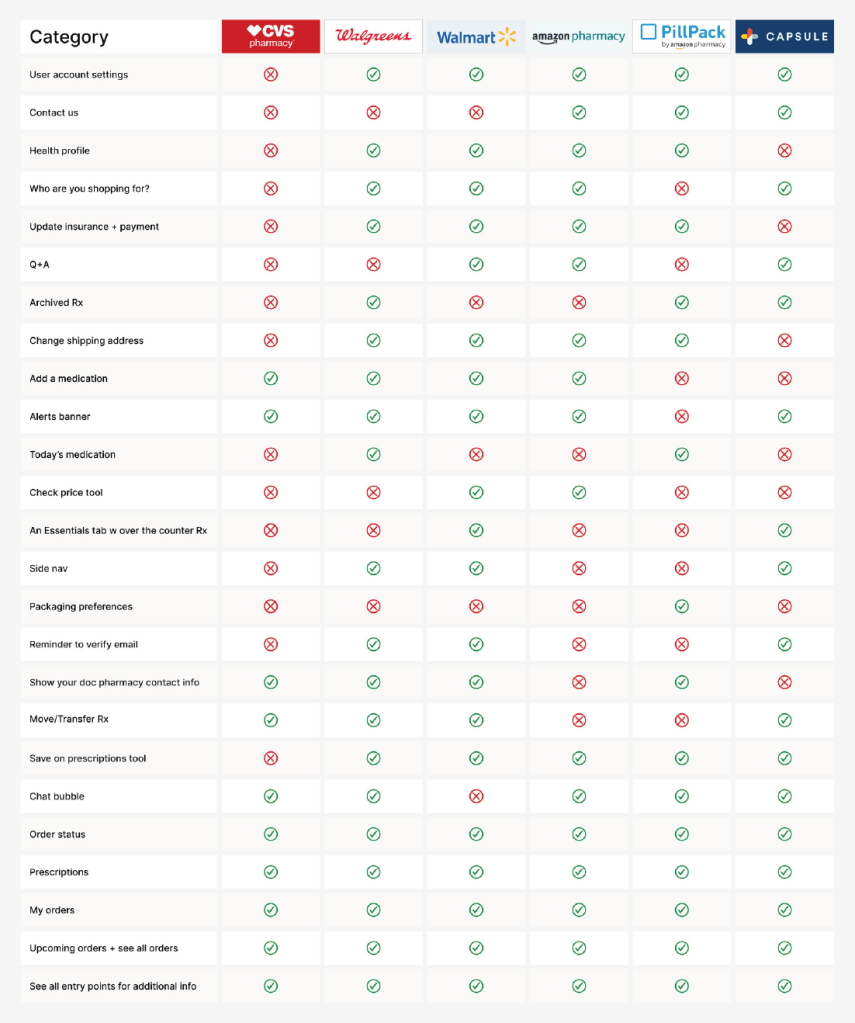
One of the first applications I worked on was non-functional and needed to be stood up in a short time frame. Before we even had proper workspaces, I was paired with a front and back end programmer and asked to start evaluating the remnants of the Rx Transfer process. Beginning a partnership with the research department, I was able to unearth some customer feedback about the process and was able to create a service diagram for the processes to be illustrated to the team. Along with the User Research department, we performed competitive analysis on feature sets and functionality. After evaluating ineffective processes, my team began building a revised set of services which would allow us more flexibility to accurately capture customer information, generate confirmation numbers for the customer to track progress, and even auto-populate customer profile data if the customer was logged in on the app. While the programmers were busy with that, I proceeded to craft a user interface which would see the first integration of what I liked to call a “pizza tracker”, akin to a form wizard, to illustrate for the user how many steps to expect in the process. This design component was subsequently integrated into the Figma design library, and could be re-used later to show a multiplicity of other order status processes for where your prescription order was located (ordered, delayed, processing, shipped, delivered). Performing competitive analysis and working with our programmers, I was able to come up with a more concise number of steps (from 6 down to 3) by which a prescription could be transferred from either an internal CVS pharmacy, and with two more bits of data, from an outside pharmacy into CVS. With Adobe Analytics newly attached, along with session replay, we could now gauge success rates which peaked at 78%, and we continued to evaluate usability issues to correct any code which was not optimized for keyboard users, screen readers and the like.


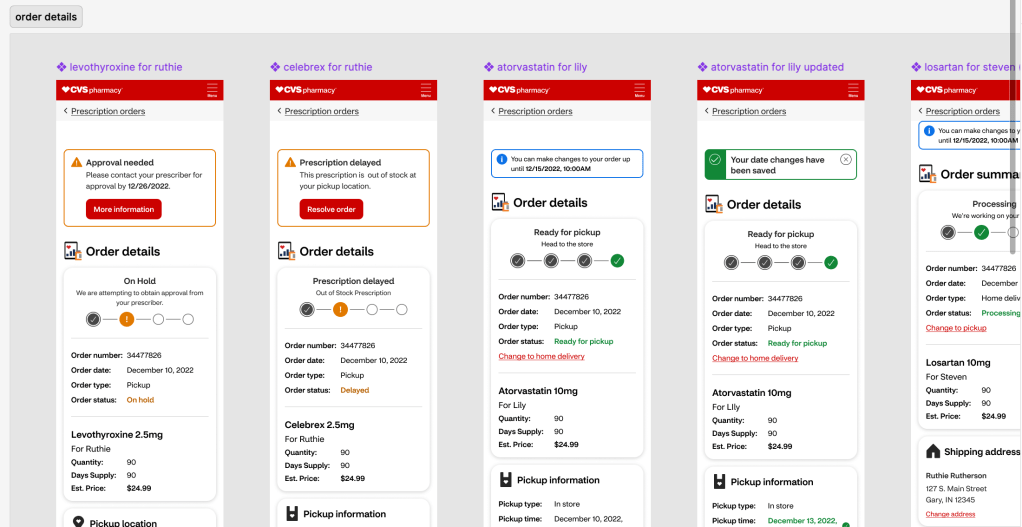
The new “pizza-tracker” (or stepper) component was integrated into the Figma design library, and was able to be re-used in more advanced process flows for Order Status Communications, illustrating stages of prescription refill, delivery, and steps needing attention by members.

 Brent Rish DESIGN