
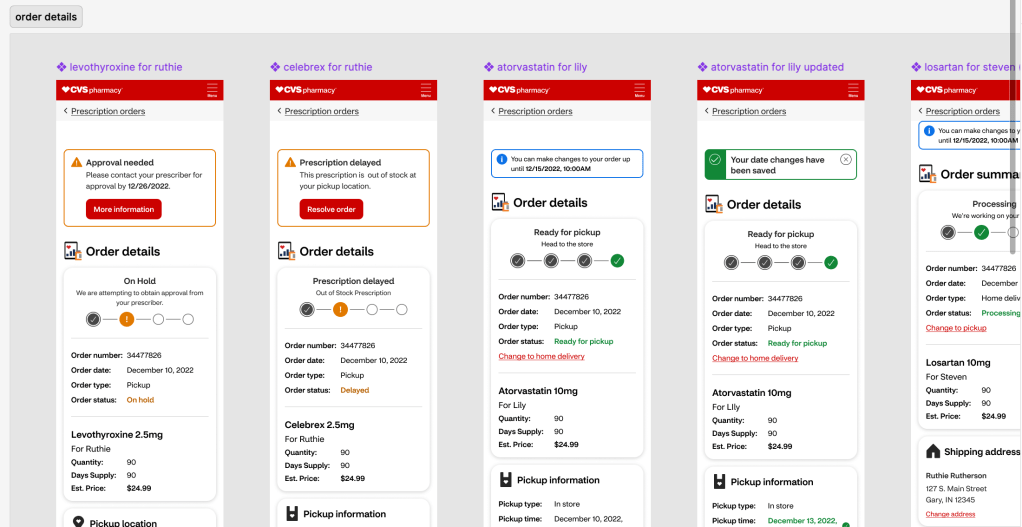
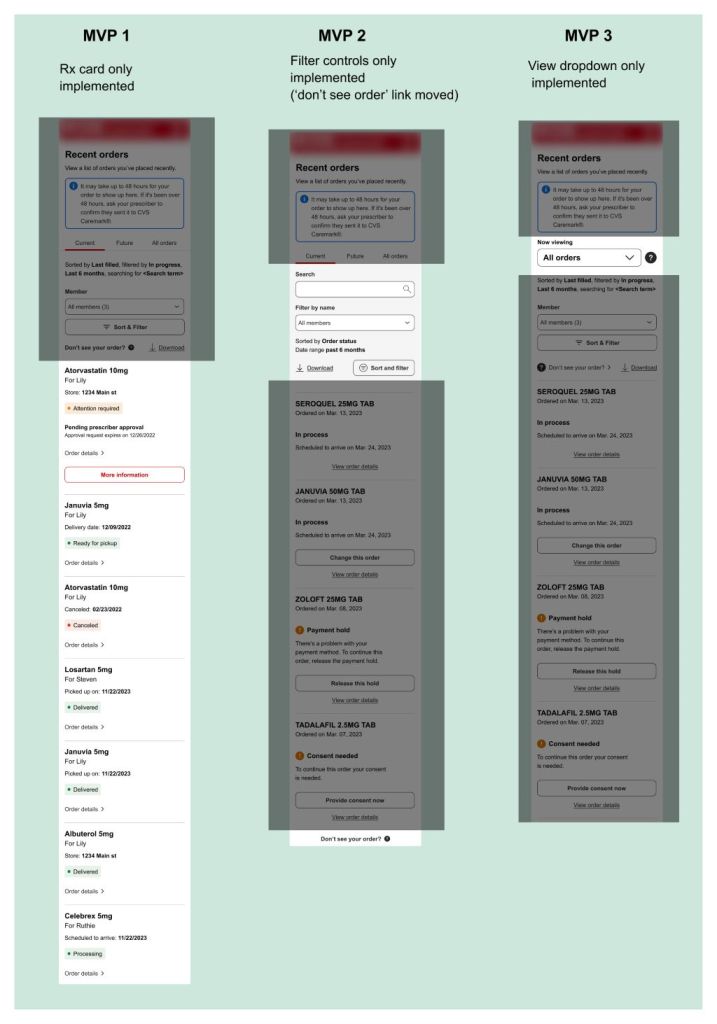
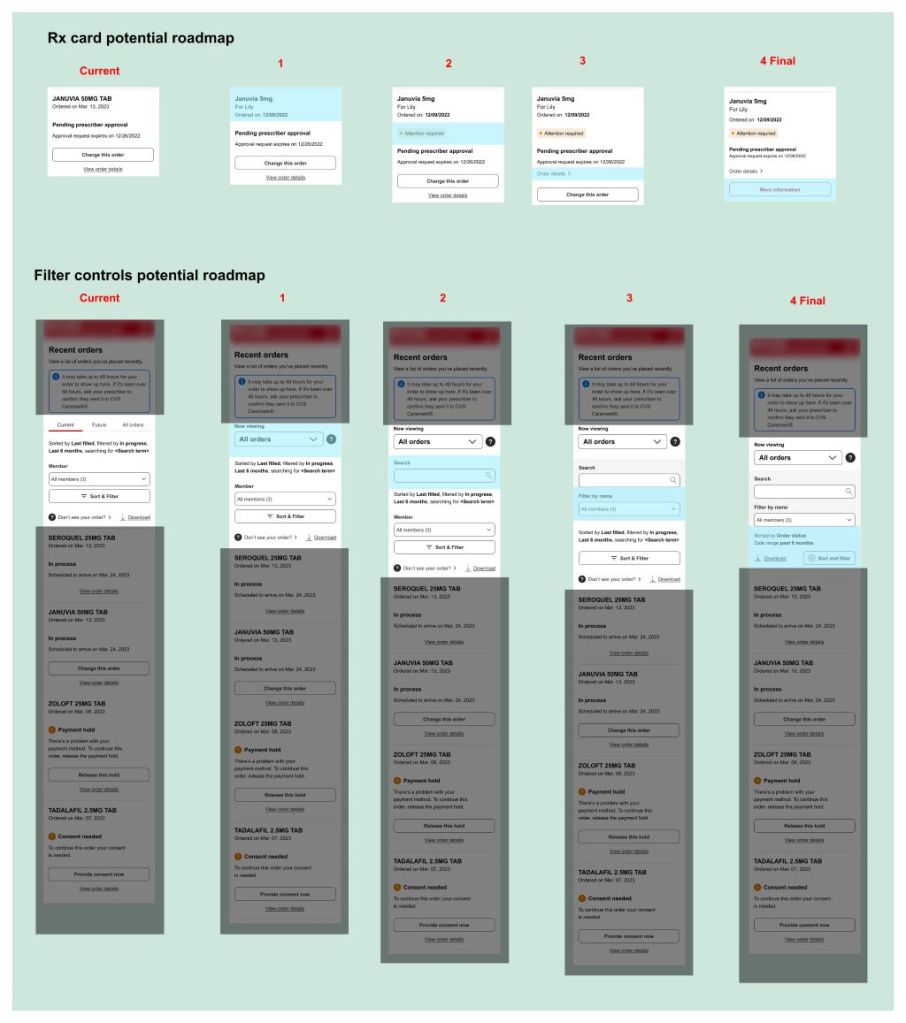
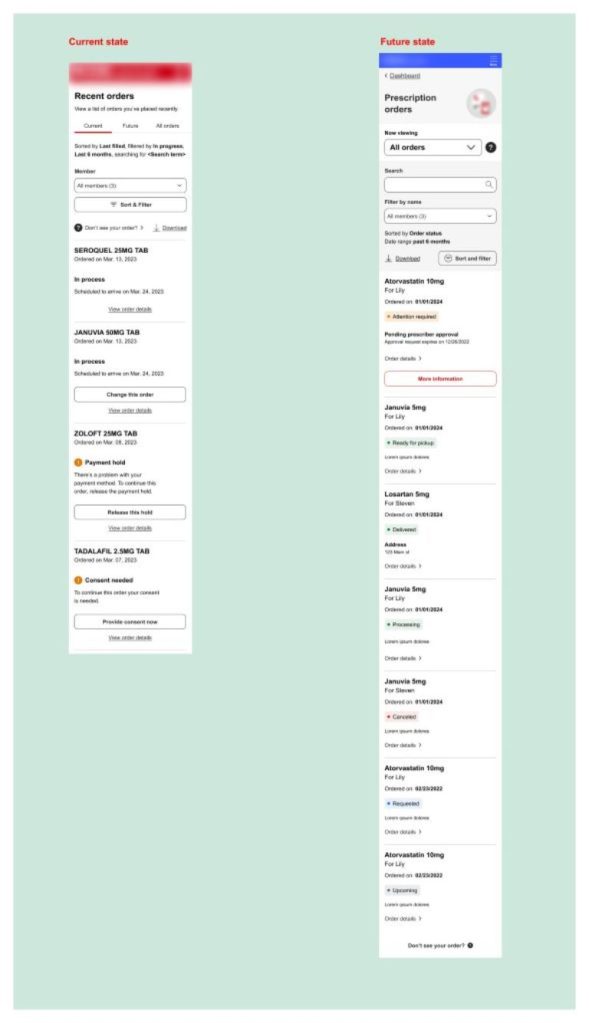
Building on the CVS Order Status Communications work, we needed a matching UI to help customers understand the status of prescriptions, which would be much more information rich than the email communications; this became the Order Details work. Operating on internal data for how prescriptions were processed, we tried to keep the customer facing information to a minimum, with 6 top-level statuses, down from the internal 12 we discovered initially. Also in focus was data our research department had on customers wishing they could, “do something” along the way if a prescription was in a certain state, like needing prescriber approval, to help it get filled. We added action notes and increased details to medications, such as prescriber contact information so the customer could call their physician if CVS was not able to get in touch with them to expedite the refill. We also identified the desire to change delivery method (opt for home delivery versus pickup at pharmacy) which increased customer fill completions and decreased return-to-stock numbers (a 13% change in the 2 months after launch), where customers would not pick up their prescriptions. Finally, we synchronized messaging triggered by these order status communications to ensure the customer was not inundated by duplicate SMS and app messaging, spacing out the timing, and even including a button where the customer could ask for the prescription to be expedited by the pharmacy if it was a high priority for the customer. We followed up with added reminders to pick up prescriptions with two-way text messaging, so if a prescription was not able to be picked up, the customer could signal the pharmacy with their delay to pick up, for up to three days, again bolstering our customer pick up rates (and further lowering return-to-stock costs) by more than 11% in the next 2 months.


 Brent Rish DESIGN